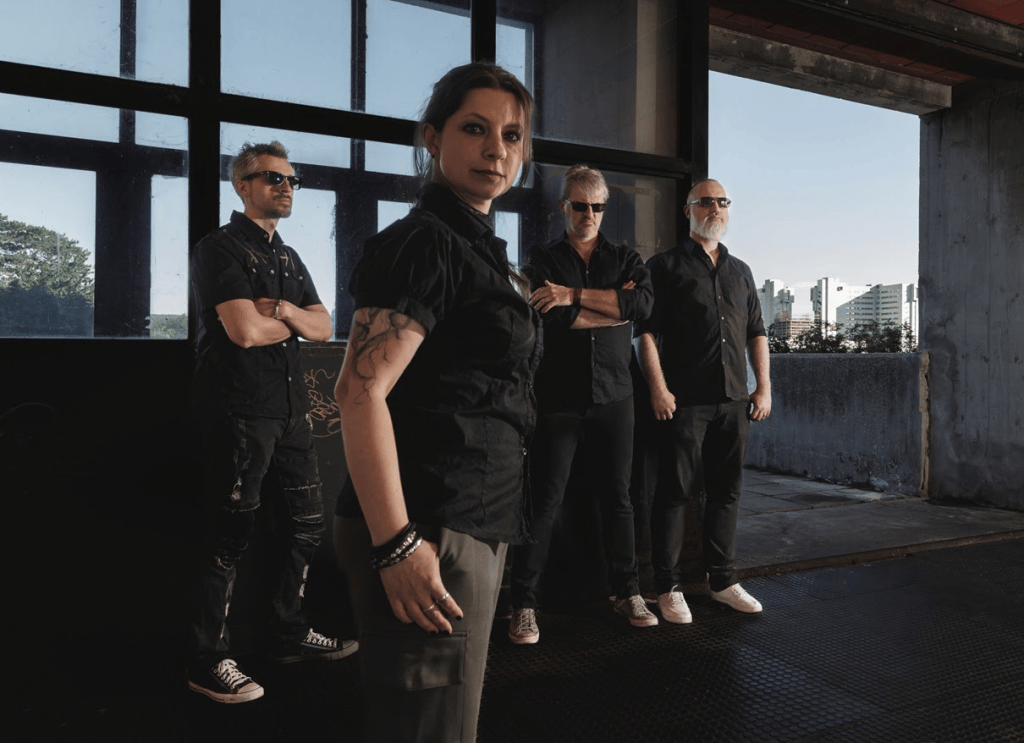
TRIESTE, ITALY — Italian prog/alternative metal band Red Code have released the official music video for “Checkmate,” taken from their debut EP “Traces of Unease and Discomfort (Episode 1)”, out via Epictronic.
“Checkmate” uses a game of chess as a framework for manipulation, control, and emotional conflict. The track pairs heavy riffs with a tense atmosphere and builds toward a point where winning and losing stop being distinct outcomes — in a game built on destruction, both sides lose.
The video is one of three chapters in An Archive of Us, a sci-fi/thriller short film that uses a dystopian setting to examine the need for control. The other two chapters are built around the tracks “Quarantine” and “Toxic Karma.” The project was produced by S@NGIORGIO 2020, with technical support from Infinity Digital.
Watch “Checkmate” here:
About Red Code
Red Code was formed in Trieste as a live act, founded by vocalist Lenina, drummer Ivo and bassist Andrea Bossi, who later passed away. Lenina and the rest of the group decided to carry on. The sound is built around her vocals and the four instruments, with no backing tracks or studio sequencing live.
Over the years, the band have played small clubs, festivals, and motorcycle rallies, opening for Cristina Scabbia (Lacuna Coil), Exilia, Nicola Manzan (Bologna Violenta), Pierpaolo Capovilla (Il Teatro degli Orrori), Underwaves, Tystnaden, Logical Terror, and Break Me Down. They’ve also been featured on Radio Rai.
“Traces of Unease and Discomfort” is the band’s first studio release after years of live performance. The sound combines the aggression of alternative metal — with reference points like System of a Down and Godsmack — with the structural influence of prog acts like Dream Theater and Fates Warning.
Stream Traces of Unease and Discomfort (Episode 1) here: orcd.co/touad
Masked rapper-guitarist Red Sky unveils the official music video for “Shoganai,” from his acclaimed album Nostalgia del Futuro, now available via Epictronic.
“Shoganai” opens Nostalgia del Futuro with a provocative message aimed at anyone who tries to ridicule, criticise, or discourage those who choose to follow their own path.
The Japanese expression shōganai means “it can’t be helped.” In the song, Red Sky turns the phrase into a defiant response to his critics: they can keep talking, but they cannot decide where he goes next.
The accompanying video captures that attitude in the streets of Kabukichō, Tokyo, where Red Sky delivers a playback performance surrounded by neon signs, city lights and the unmistakable energy of the Japanese capital. The setting adds another layer to a track written around independence, self-belief, and refusing to let other people’s opinions dictate your direction.
“Shoganai” is featured on Nostalgia del Futuro, an ambitious album inspired by Maxwell Maltz’s Psycho-Cybernetics and the longing for the person we are still becoming. Written shortly before Red Sky’s life-changing move to Japan, the album serves as a personal and sonic manifesto, bringing together metal, rap, electronic music, reggae, and traditional Japanese and Middle Eastern influences.
Across the record, Red Sky explores identity, ageing and self-worth through a distinctly cross-cultural perspective, combining personal experience with a genre-defying approach to songwriting.
Red Sky is a masked rapper-guitarist who has challenged musical conventions since 2011. His Kintsugi Music philosophy brings together rap, metal, electronic music, and global influences, with Japanese culture playing a central role in his evolving sound.
Over more than 15 years, Red Sky has released 14 albums, shared stages with major Italian artists and built an international following around his distinctive fusion of music and visual identity.
His music connects with listeners drawn to conscious Italian rap such as Caparezza and Rancore, modern metal acts including Linkin Park, Rammstein, and Falling in Reverse, and Japanese culture and music with a deeper message.
Visionary music composer Happy Sad continues to expand his ambient classical universe with the release of the new music video for “The Flow of Time,” taken from the album The World Is Grand When We See, out via Epictronic.
Rooted in post-classical expression, “The Flow of Time” blends acoustic piano, string arrangements, ambient synthesizers, and subtle environmental recordings. The result is a soundscape shaped by movement and stillness at once, where texture carries as much weight as melody.
The track reflects a strong visual and compositional sensibility. Flowing water recordings sit beneath evolving piano phrases, creating a sense of continuity and impermanence. Ambient synth layers appear at key structural points, adding depth without disrupting the natural pacing of the piece.
Happy Sad describes an indirect influence from contemporary French minimal composition built around limited harmonic material, where development emerges through restraint rather than expansion. That idea translates here into a focus on space, repetition, and gradual transformation.
There is also a clear painterly approach to the sound design. The music behaves like a layered landscape, where foreground and background shift in tonal clarity. Distant elements feel softened, as if filtered through multiple atmospheric layers, echoing the way depth alters perception in visual art.
Field recordings remain an essential part of the process. Water sounds, captured personally by the composer over time, reappear as part of the sonic architecture. These moments ground the composition in physical reality, balancing the more abstract instrumental writing.
“The Flow of Time” stands as a study in transition, where nothing remains fixed and meaning is found in movement itself.
Watch “The Flow of Time” here:
Happy Sad is the solo project of Hiroaki, a Japanese artist and sound professional based in the game industry. He began making music during his student years, playing café bar gigs and recording demos. His influences take in soul, British rock, folk, trip hop, neoclassical, world music, and film scores, alongside a strong connection to literature. His recordings balance live instrumentation with programmed elements. To date, Happy Sad has released seven albums and 19 EPs.
Outside of music, Hiroaki has around 14 years of experience as a Sound Designer and Sound Director in the games industry, having contributed to over 60 projects at companies including NetEase Games, FunPlus, NHN PlayArt, and Noisycroak Inc. His work spans music composition, sound design, audio direction, and promotional video production. In 2013, his track “Everyday” won the domestic DJ category and reached the finals of MTV and Lenovo’s CO:LAB contest.
In recent years, Hiroaki has travelled across ten countries in search of sounds and traditional instruments. Encounters along the way with displaced communities have shaped his approach to music as a form of shared human expression.
The World Is Grand When We See is out now via Epictronic.
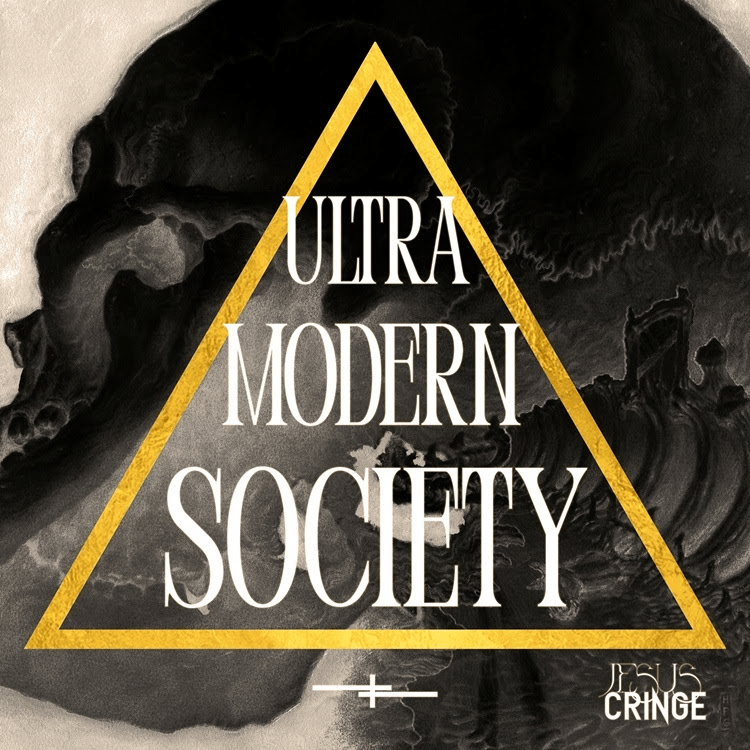
Belgian cinematic space-art rock project Jesus Cringe has released “Ultra Modern Society”, the sixth single from the highly anticipated debut album, forthcoming via Epictronic Records.
“Ultra Modern Society” is available now on all major streaming platforms.
One of the album’s most confrontational tracks, “Ultra Modern Society” blends the cinematic grandeur of progressive rock with the raw intensity of alternative metal. Drawing sonic inspiration from the emotional scale of Muse and the weight of Stone Sour, the song expands its palette with electronic textures, orchestral arrangements, and immersive sound design, evoking a futuristic dystopia collapsing under its own contradictions.
Released on September 14, the Feast of the Exaltation of the Holy Cross, the song reflects the paradox of modern existence: while the Cross represents a path toward liberation through self-sacrifice, contemporary society increasingly offers the illusion of freedom while quietly shaping our identities, desires, and dreams.
Lyrically, the song explores the tensionbetween individual consciousness and algorithmic society. Images of censorship, simulated realities, surveillance, and singularity merge into a stream of fragmented thoughts where euphoria and panic become indistinguishable. Rather than delivering a political manifesto, “Ultra Modern Society” captures the psychological state of living in an age where every opinion is amplified, every desire is monetized, and every imagination risks being filtered before it can exist. The recurring pleas to “censor me” and the invocation of “Big Brother” reveal a paradoxical longing for both freedom and control.
Musically, “Ultra Modern Society” constantly subverts expectations. As a defining element of Jesus Cringe’s sound, traditional guitar and bass roles are replaced by expressive violin and saxophone, creating a sonic landscape that feels both organic and alien. Industrial drumming, layered electronics, and a dense tapestry of synthesizers propel the listener through an epic, cinematic journey where every element reinforces the song’s dystopian atmosphere. Rather than simply accompanying the lyrics, the production embodies the collision between humanity and technology, blurring the line between acoustic performance and machine-driven intensity.
At its core, “Ultra Modern Society” asks a simple yet unsettling question: what becomes of humanity when imagination itself is curated? It is less a critique of technology than a warning against surrendering our capacity to dream. In a world obsessed with optimization and conformity, the song argues that the most radical act may simply be to preserve the freedom to imagine differently.
Live Shows
Jesus Cringe will bring its distinctive sound to the stage with the following upcoming live performances:
November 20 — B21, Brussels, Belgium Guests TBC
December 4 — Grillen, Colmar, France With Twelve Diversions and Adam Doppler
Jesus Cringe is a Belgian cinematic space-art rock project, rebuilt from the foundations of 22 for Silicon Alone. The project is built around philosophical storytelling and strong visual identities, and takes a deliberately unconventional approach to instrumentation — replacing the standard guitar/bass setup with violin and baritone saxophone. The result is a sound that sits outside any obvious genre bracket, drawing from avant-garde rock, pre-rock traditions, and sci-fi cinema.
The project signed to Epictronic Records in early 2023. Their debut album unfolds as a large-scale narrative work — part dystopian fable, part personal confession — and has generated coverage in Metal Shock Finland, Tinnitist, MHF Magazine, Headbangers News, and Prog Rock Journal, alongside airplay on Unsigned Radio UK, WTSQ FM, Nu Rock Radio, Diverse World Music Radio, and Rockers and Other Animals.